World objects now have an authoritative session path.
The newest CaretakerMP work moves important world objects into a server-owned state flow.
Lights, switches, doors, cables, outlets, heal stations, batteries, and power modules can be tracked as session objects instead of being treated as loose local-only moments.
For players, that means the project is getting closer to shared world actions that feel believable in a private crew session.
For hosts, it creates a clean foundation for scripted activities, persistent session state, and future object interactions without bundling proprietary game data.
Session-owned stateObject updates are handled through CaretakerMP packets and safe hook inbox lines.
Cleaner adapter pathConfirmed object patterns are mapped carefully and kept separate from bundled game assets.
Persistence baseServer-side object state can survive restarts through the world save root.
Launcher
Second-machine setup is safer for players.
A big part of private multiplayer is getting another real machine into the session without weird setup pain.
Recent work improved the Bridge and local hook connection so a normal player setup is less likely to be blocked by Windows identity or elevation differences.
World installation also became safer on fresh machines. The launcher now resolves the game-visible save folder more carefully,
remaps hosted save files for the local player, cleans stale invisible root files, and keeps rollback available through the World Safety Vault.
Cleaner first joinFresh PCs can install the hosted world into the folder the game actually reads.
Safer local permissionsBridge and hook communication is set up for authenticated local users.
Rollback remains centralWorld installs stay previewable, backed up, and reversible.
Session proof
Two-player presence is visible in-game.
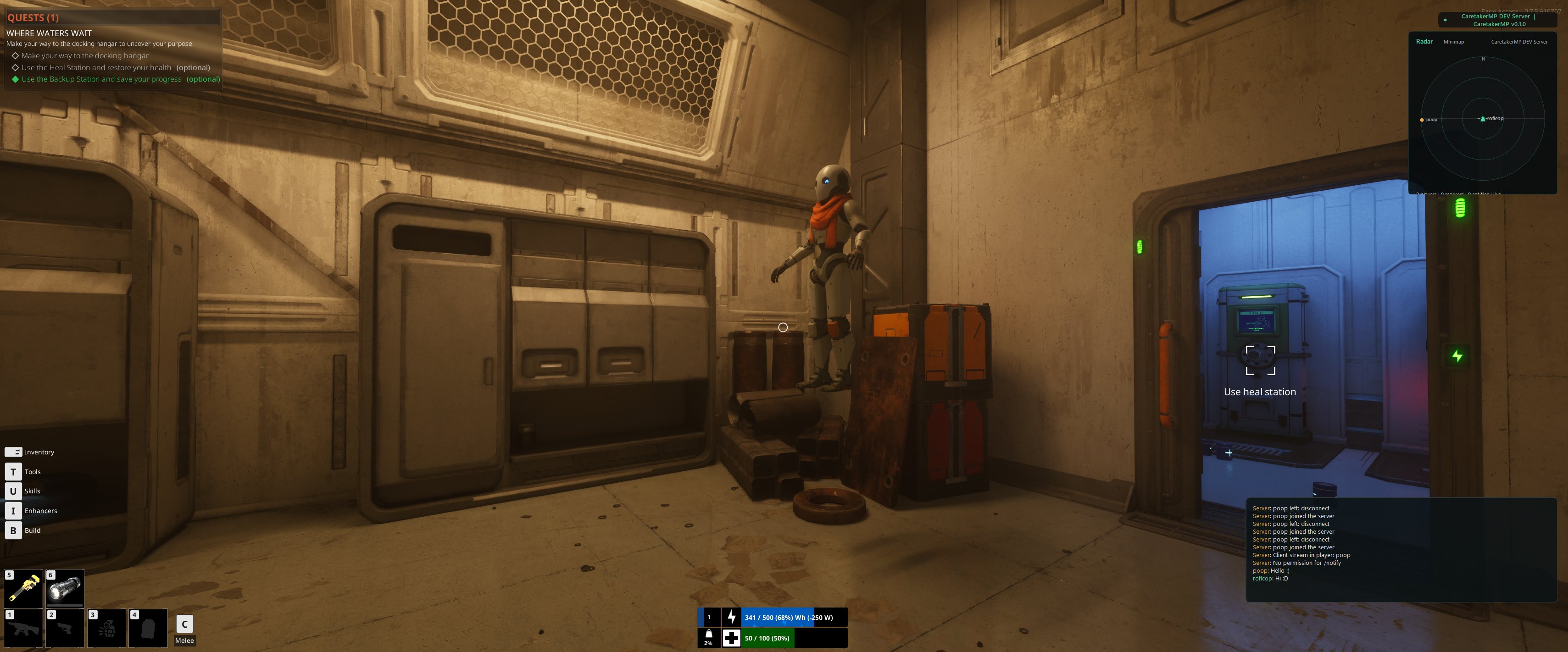
The current private session captures show the pieces working together:
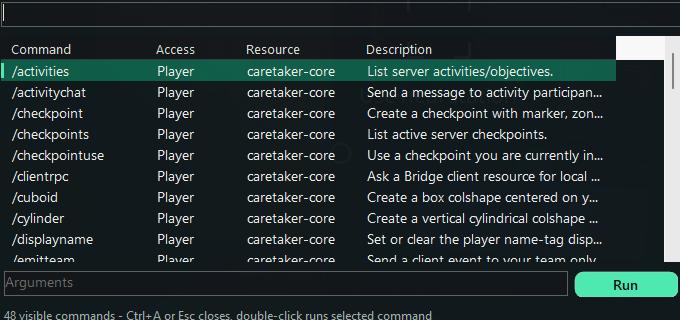
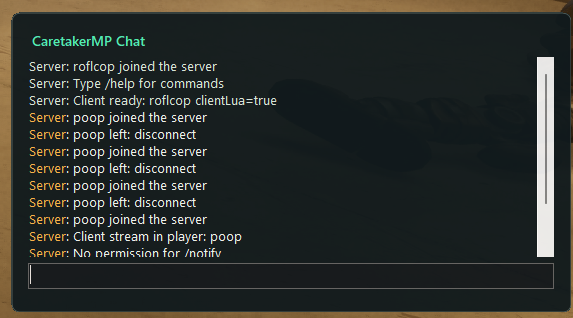
two player signals on the radar, join and stream-in messages in the chat feed, and a command browser that exposes session actions without leaving the game.
This is an important milestone because it is not just a launcher screen or a server log.
It shows the session becoming visible inside The Last Caretaker while the original game HUD remains intact.
Two-player private session proof with radar, chat, and world state visible together.
Discovery
The public server viewer is connected to real host updates.
CaretakerMP now has a first-party public server viewer for hosts who choose to list their reachable session.
The viewer can show slots, password status, version, protocol, world label, region tags, and last-seen health.
Listings are opt-in and intentionally narrow. They do not publish server passwords, listing keys, player identities, save paths, local paths, or logs.
Invite-only sessions still work normally without appearing on the public viewer.
Opt-in visibilityHosts decide when a session appears on the public page.
Useful for playersPlayers can see whether a listed session is alive before joining.
Privacy boundaryOnly public session metadata is shown.
Overlay
Radar, chat, command browser, and session tools feel closer to one product.
The overlay work has moved beyond a single chat box. CaretakerMP now brings together passive chat, session messages,
command browsing, Crew HUD, Signal Doctor, Quick Actions, Session Journal, and Radar/Minimap under one visual language.
The important part is restraint: overlay windows stay tied to a playable game session, avoid stealing focus,
and use CaretakerMP session data instead of extracted map geometry.
Command browsing and chat are now presented as part of the same in-game session shell.